Client: Mercy medical group
Mercy is one of the largest health care system in the U.S. and serves millions of patients annually from 35 acute care centers, 11 specialty hospitals, and more than 700 physician practices and outpatient facilities. Mercy has 40,000 co-workers and more than 2,000 Mercy Clinic physicians in Arkansas, Kansas, Missouri, and Oklahoma.
Team:
Design: SAP Design & Co-Innovation Center
Technology: SAP Innovation Center Network
My responsibilities:
I led the first design phase for this new product to prepare SAP ICN to effectively communicate and collaborate with the Mercy group. I worked closely with project manager, information architect and data scientist to identify use cases, create storyboard, brainstorm solutions, iterate design, create interaction/visual design and prepare project documents to present to the customer.
Problem to solve:

The project management team run Design Thinking workshop and user research with Mercy’s experts to go through customers' problems and pain points. It turned out that even Mercy has about over 30 years of data available, the existing legacy medical ERP system in this hospital network was large and complex so that the data is hard to be used. The data dictionary is difficult to understand and only a few staff across different departments have the necessary expert knowledge of the entire system. It is extremely hard to have a consistency in analyzing lab results, prescribing medications, and overall treatment of patients. The customers wished to have a simple way for data mining to measure Mercy’s performance in real time.
After understanding Mercy's most critical problems, the project team worked with Mercy to define the product scope: 1) Build a Data platform that can host collective information from different sources at Mercy Hospitals. 2) Generate cancer and diabetes metrics. 3) Provide more granular information and detailed analysis for the metric. 4) Three personas – Doctor, Care Provider team and Administrative officer.
After scoping the whole product, the challenge statement for the first design phase became clear:
HMW provide a powerful tool that can help Mercy's administrators to effectively supervise the overall performance of the group, easily find out problems, and give suggestions to better serve their patients?
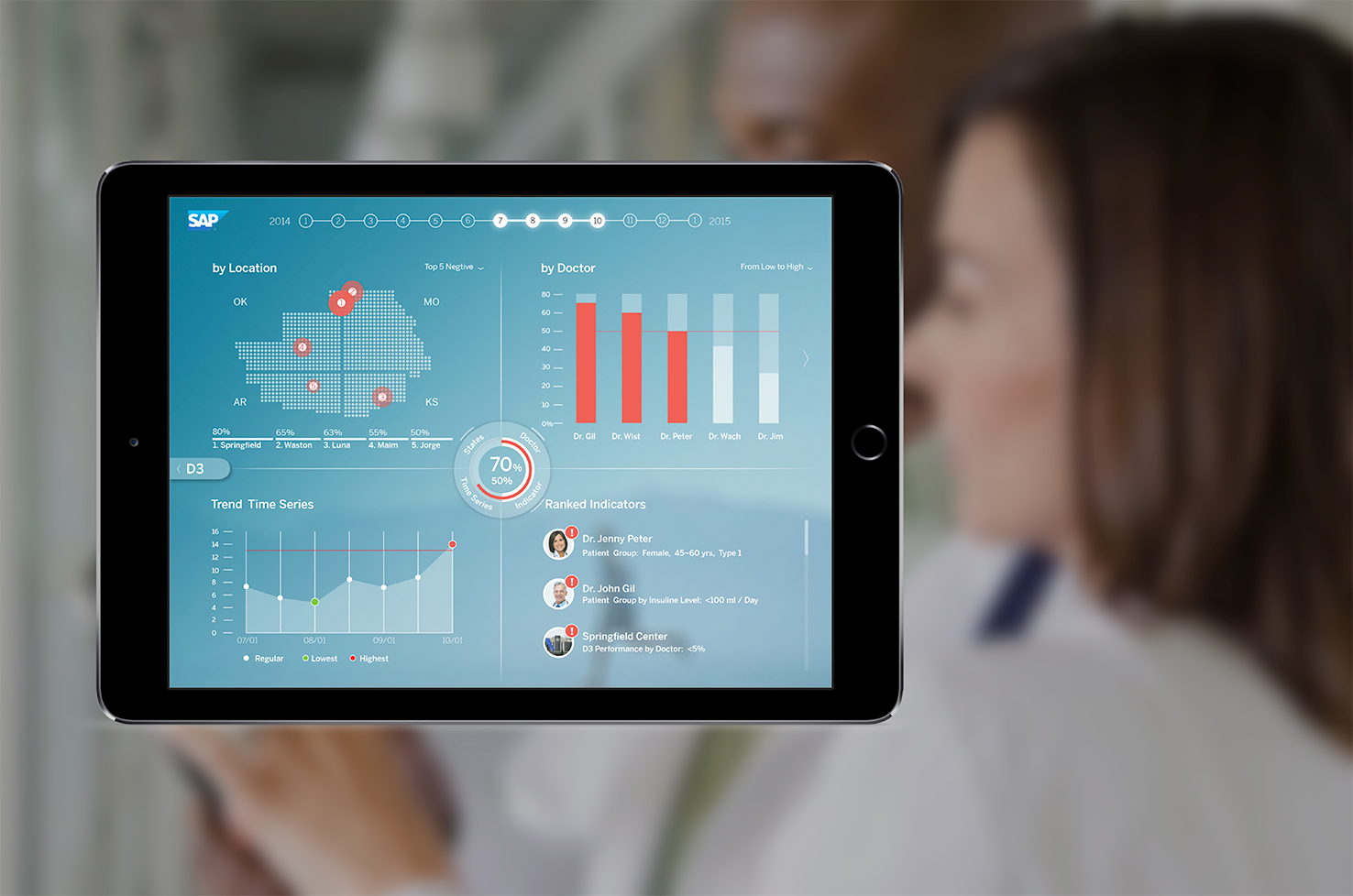
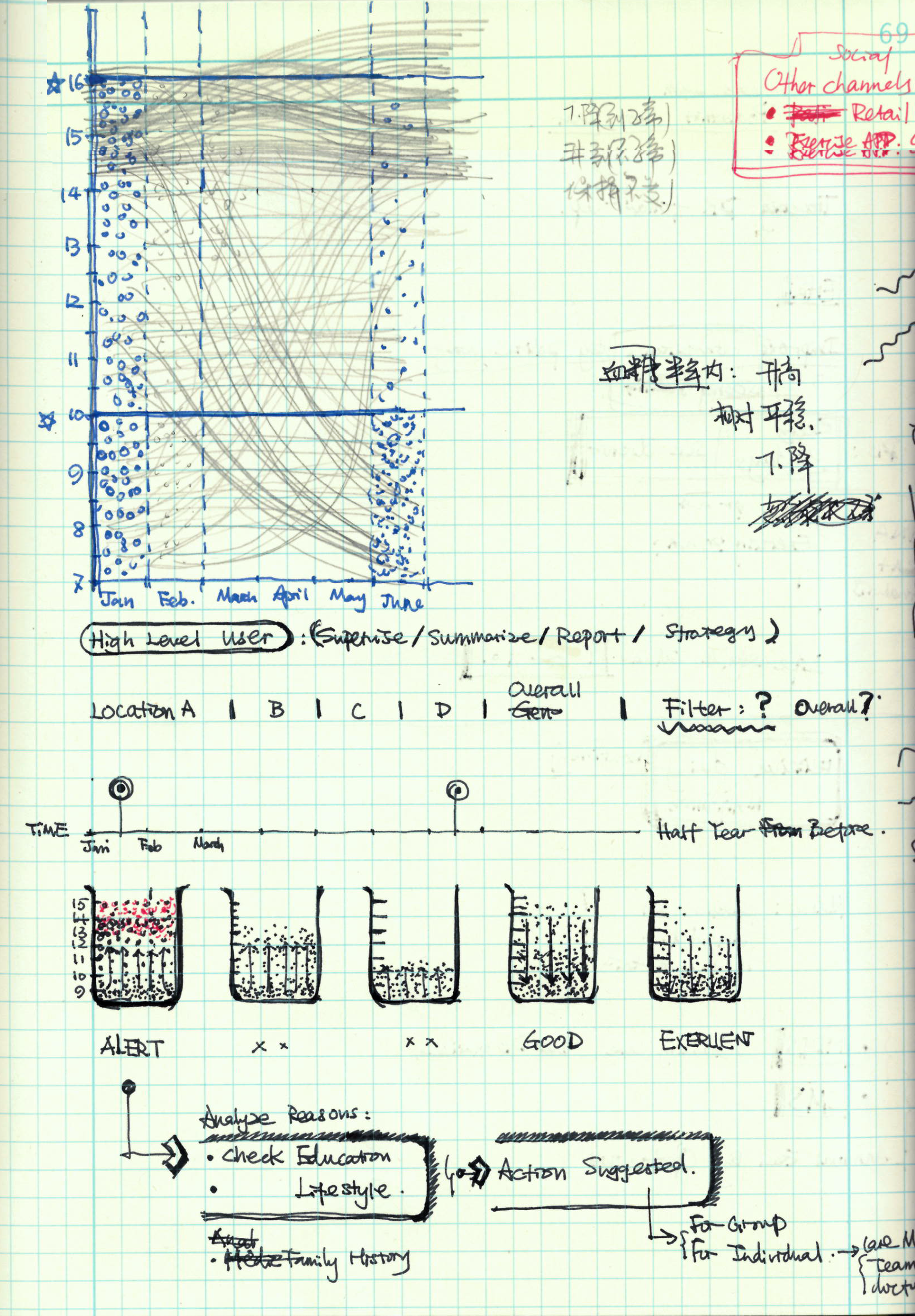
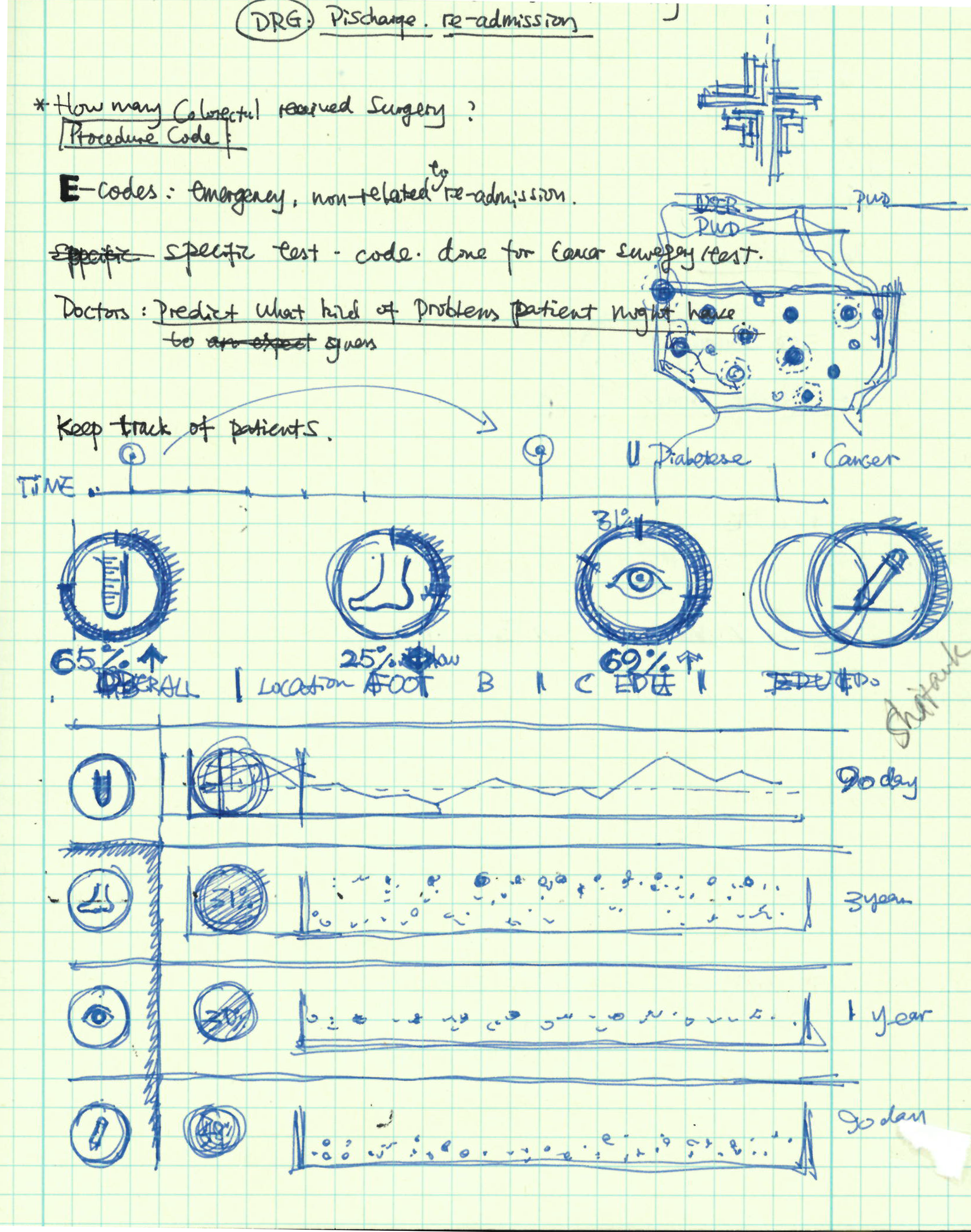
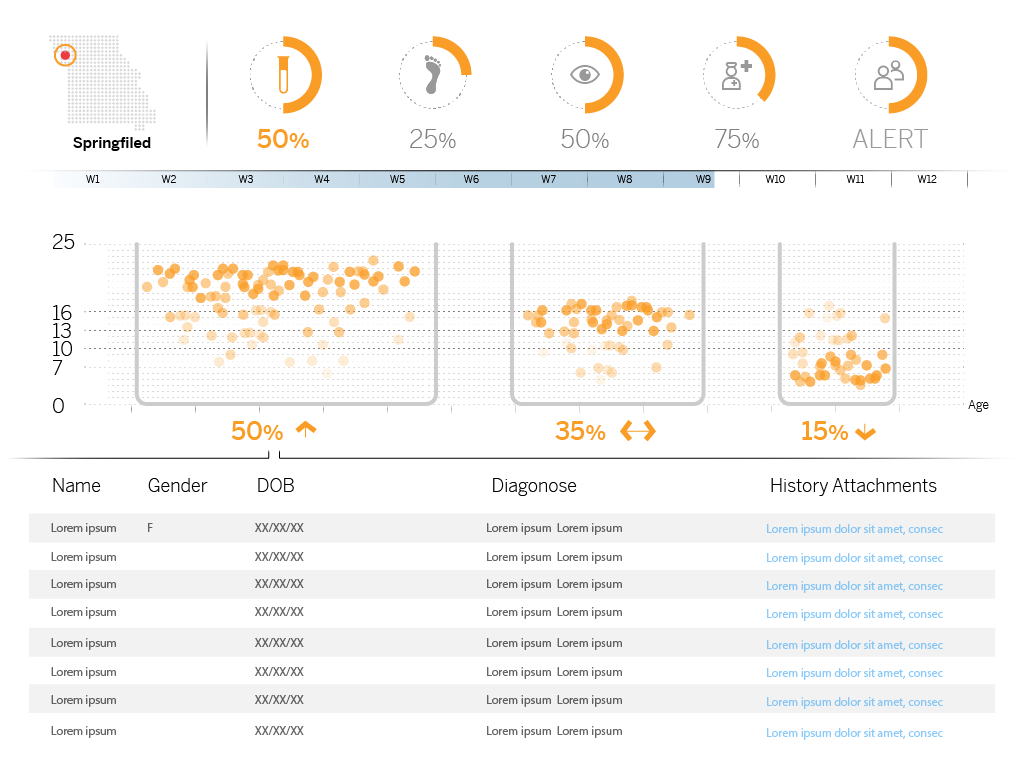
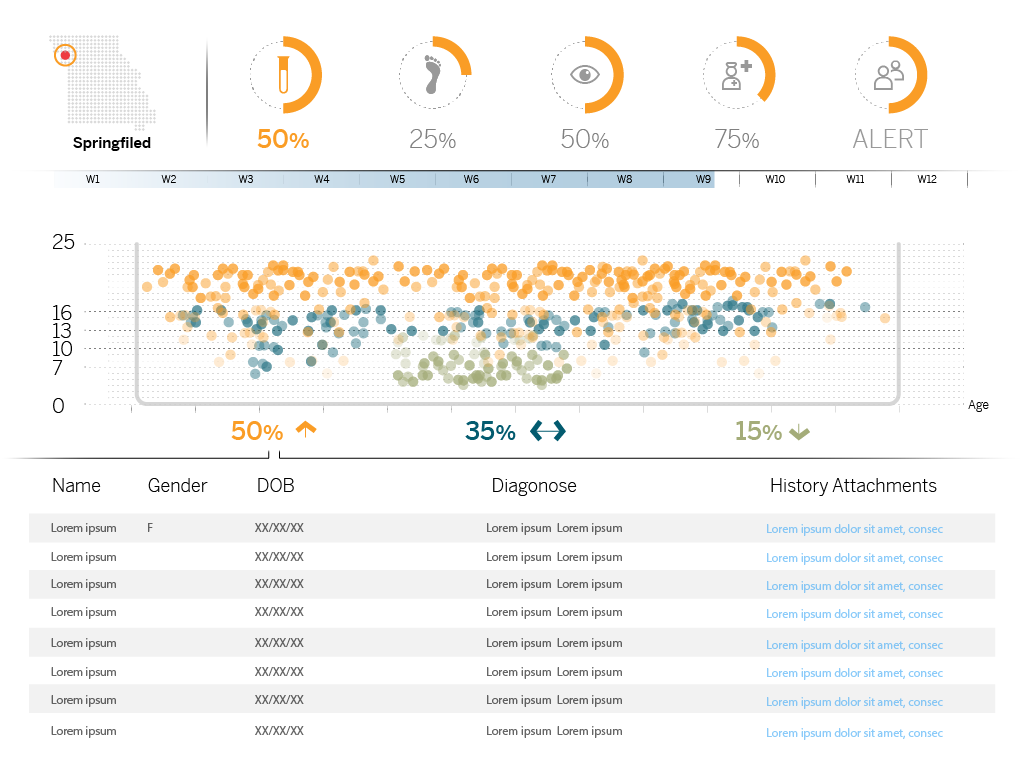
This app will allow user to slice and dice data to identify bottleneck for better care management. It will use machine learning and data mining algorithms to perform medical research like symptom and behavior analysis for cause of disease.
Process of finding and designing solutions:
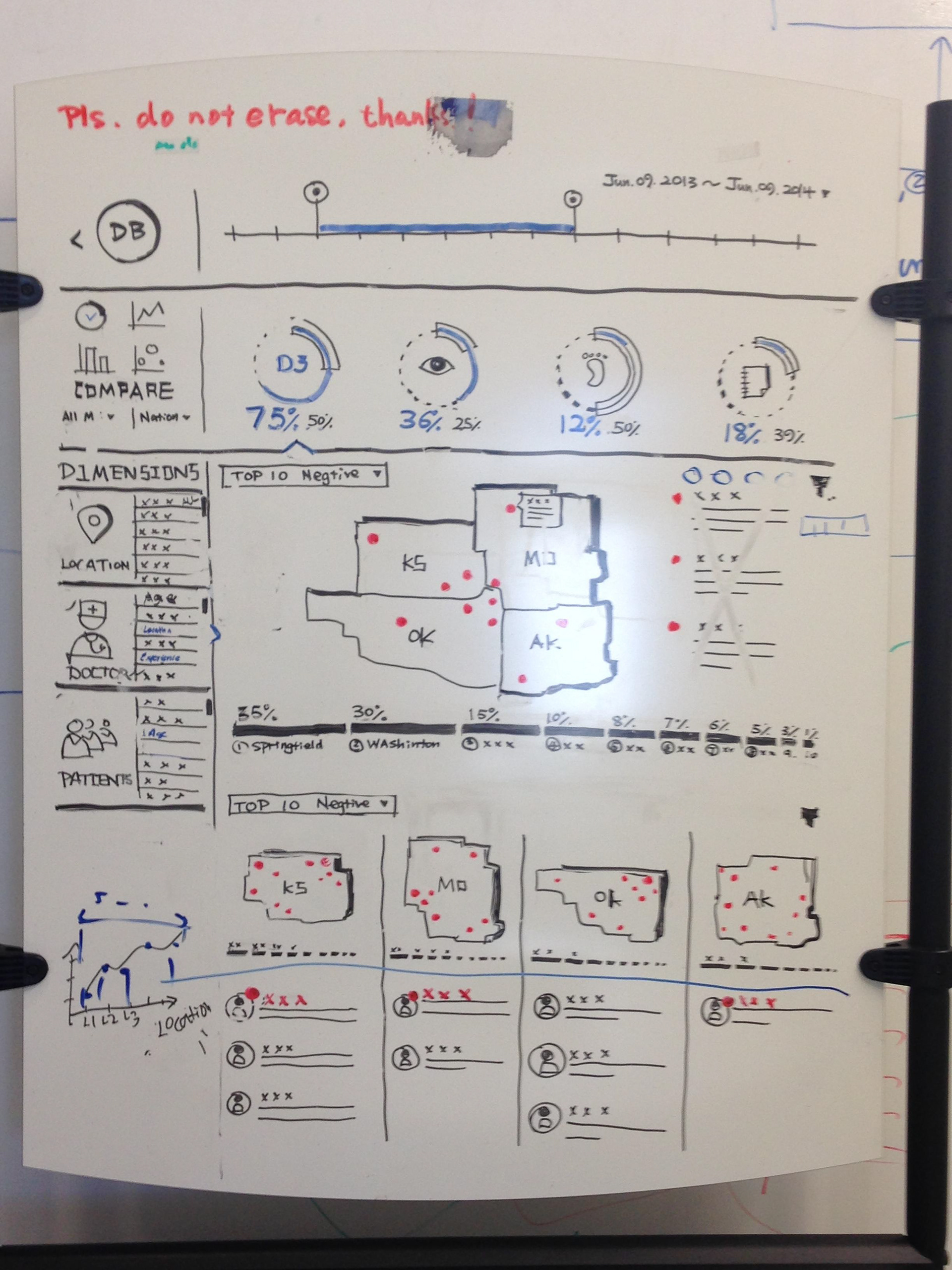
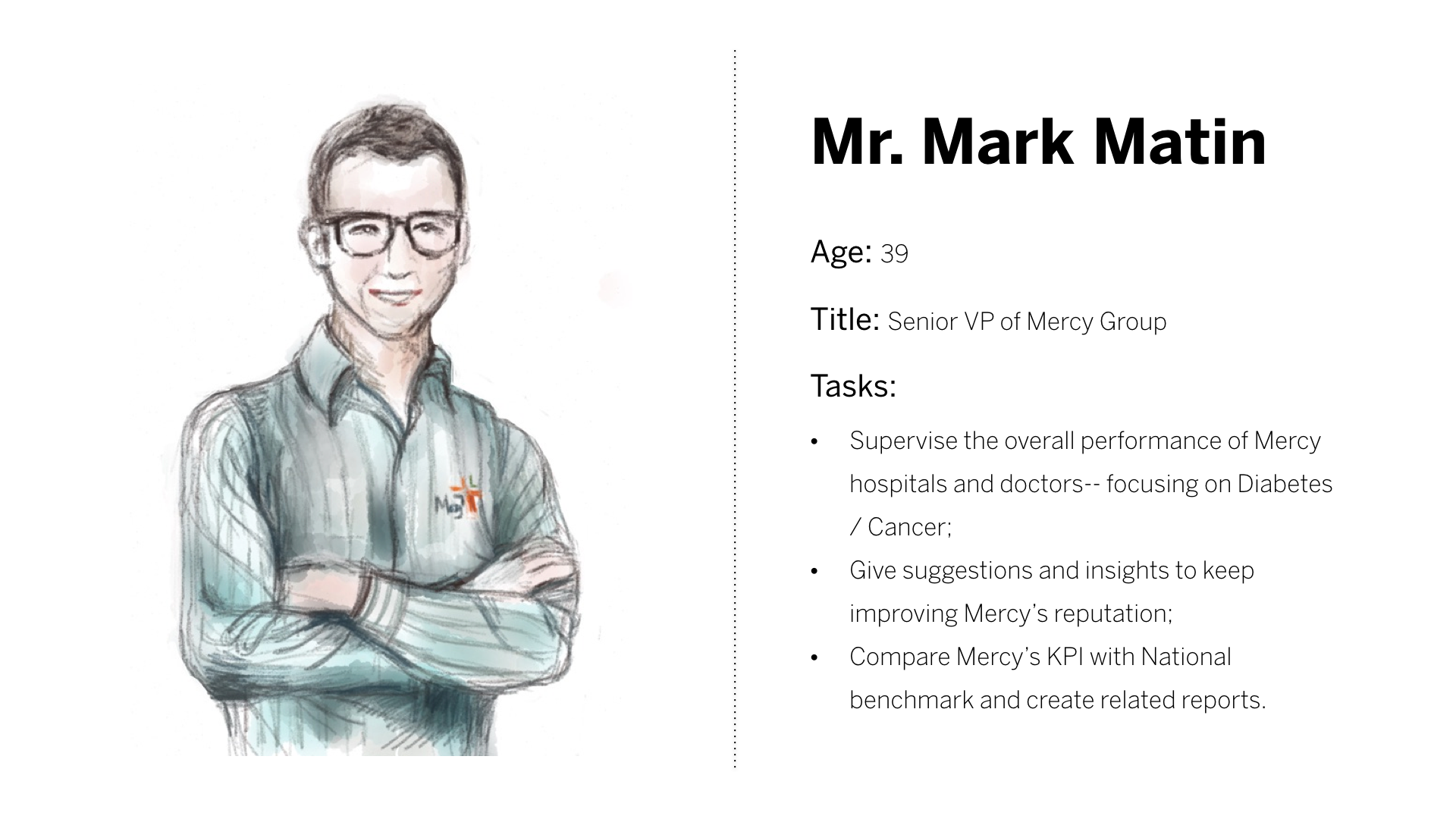
1. Clarify use case and create storyboard. The first phase of the design focused on Administrative officer, the person whose main tasks are: 1) Supervise the overall performance of Mercy hospitals and doctors – focusing on Diabetes and Cancer. 2) Give suggestions and insights to keep improving Mercy’s reputation. 3) Compare Mercy’s KPI with National benchmark and create related reports. 4) Supervise the overall medical service quality across the whole mercy group.
I used the whiteboard to draft story to help the team identify/finalize use cases
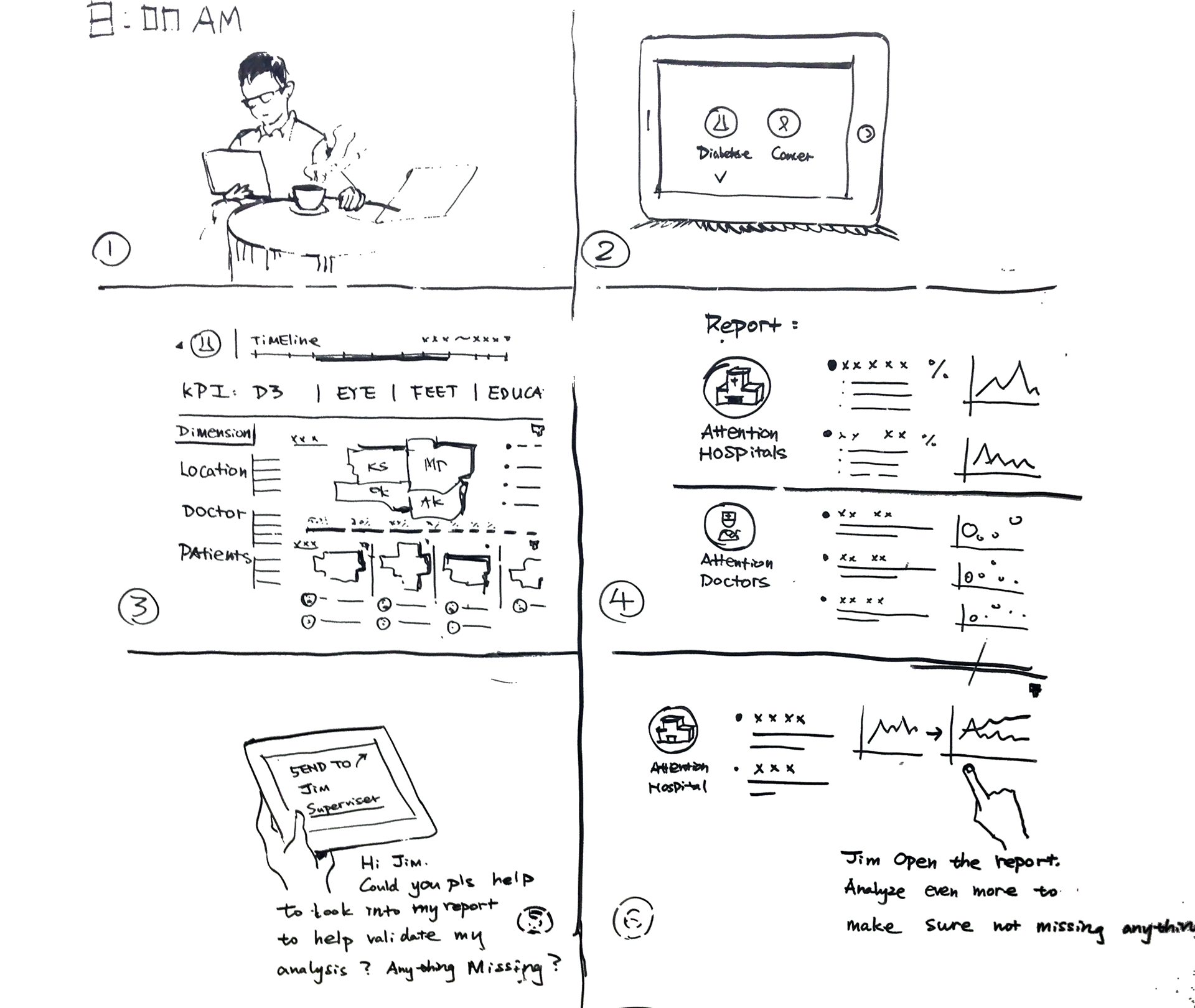
2. Brainstormed and iterated solutions with the whole team until a final agreement of design was generated. The whole team brainstormed solutions together. We first created the storyboard to illustrate how this product could help the end users work easier and improve Mercy’s health care service. When I proposed ideas, I needed to consider both interaction design and visual design because the project aimed to initiate the collaboration between Mercy and SAP so that the design needed to wow the customers when they took the first glance.
Design Iteration – 1
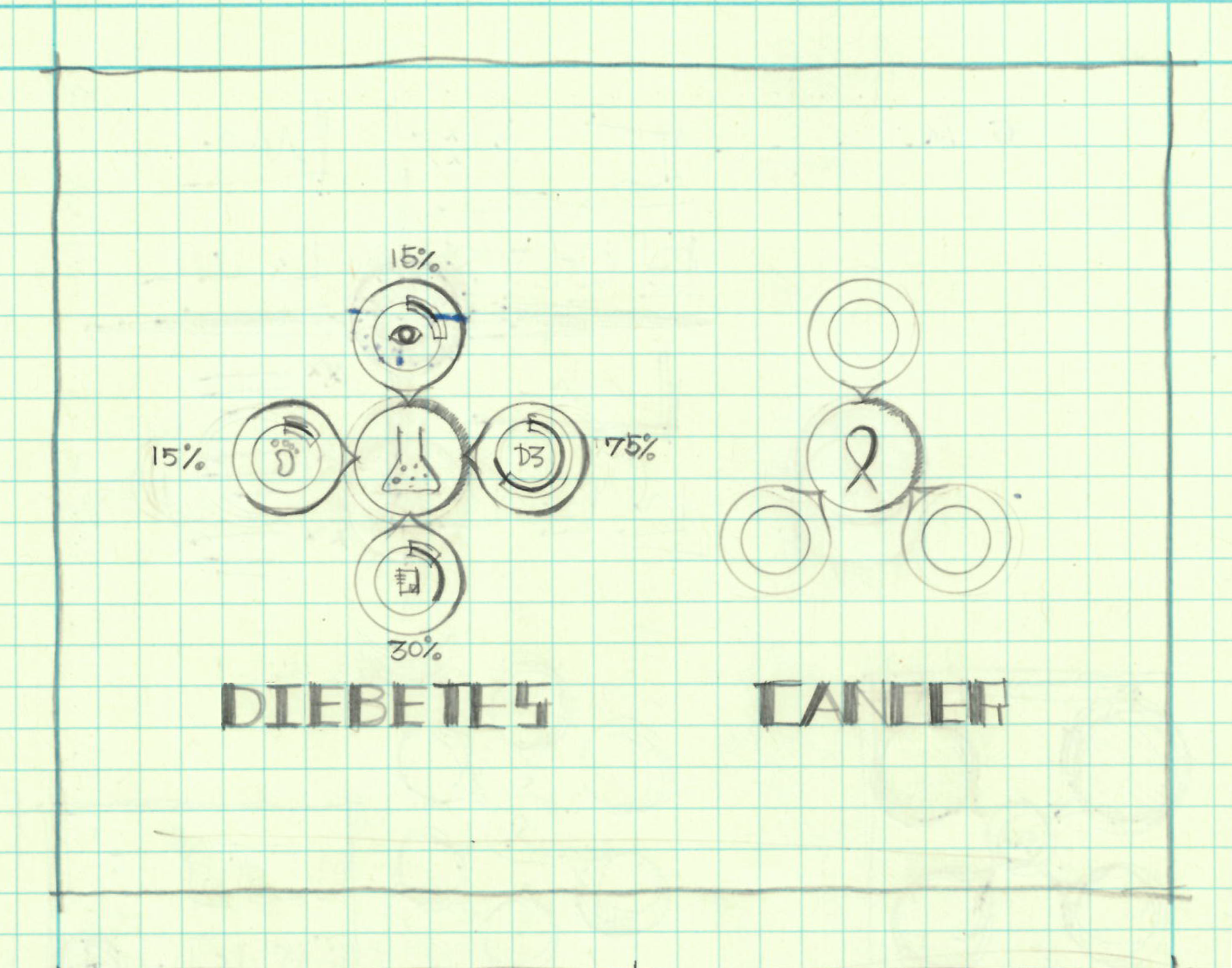
Understand disease metrics and explore different visualizations of data rendering
Design Iteration – 2
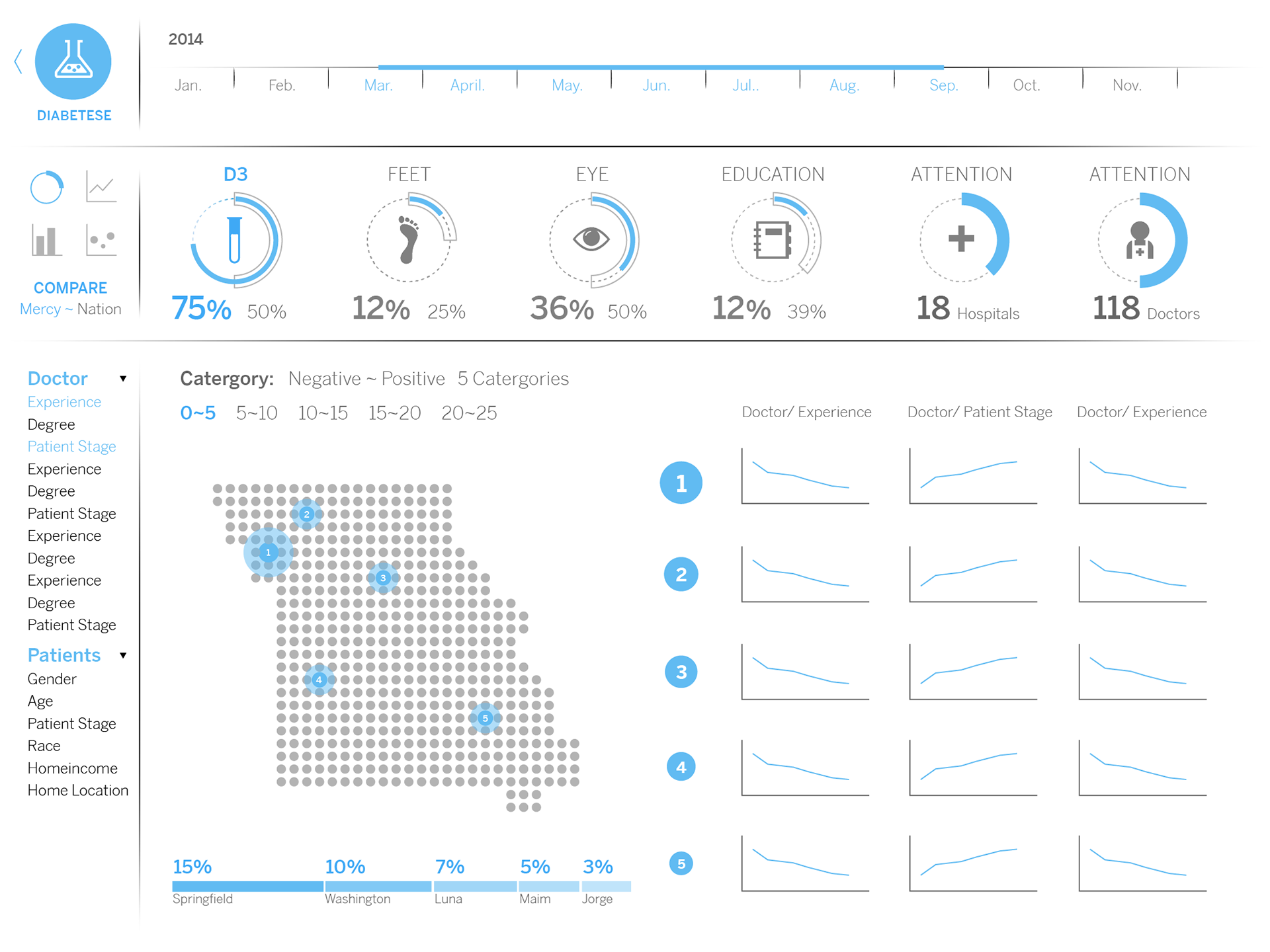
Validate the content and information that were needed on the screen
Design Iteration – 3
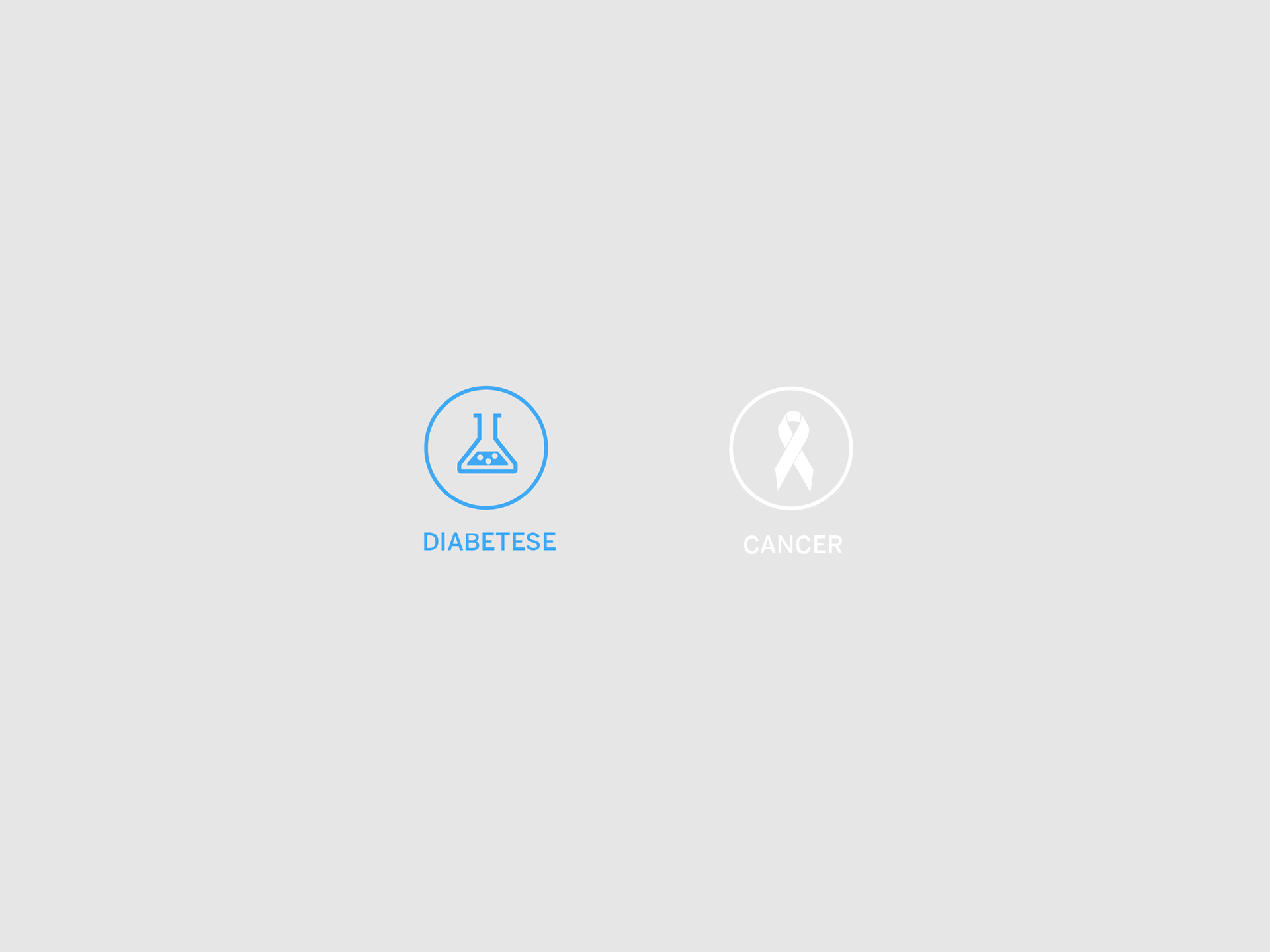
Brainstorm unique interaction control to make the interface intuitive
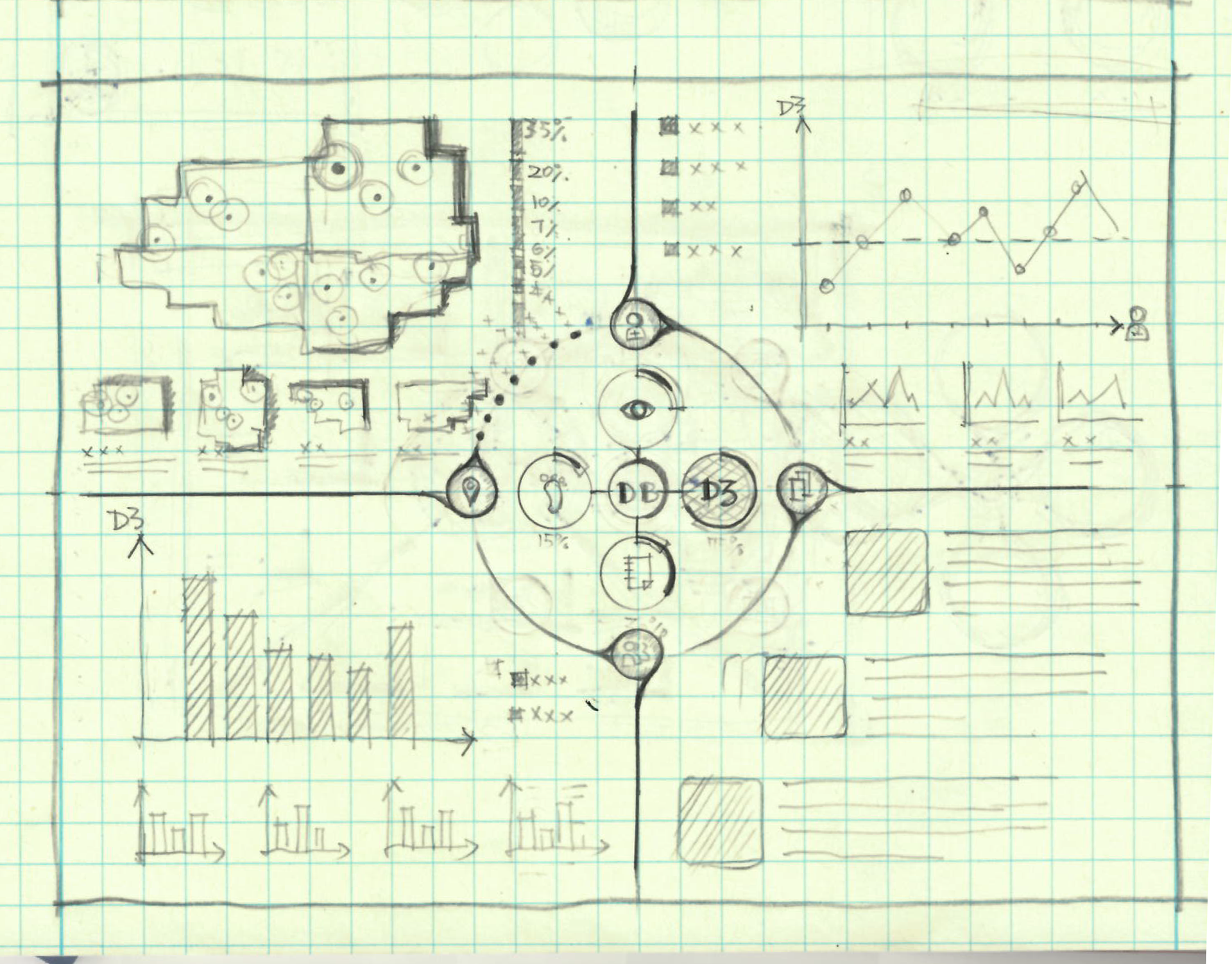
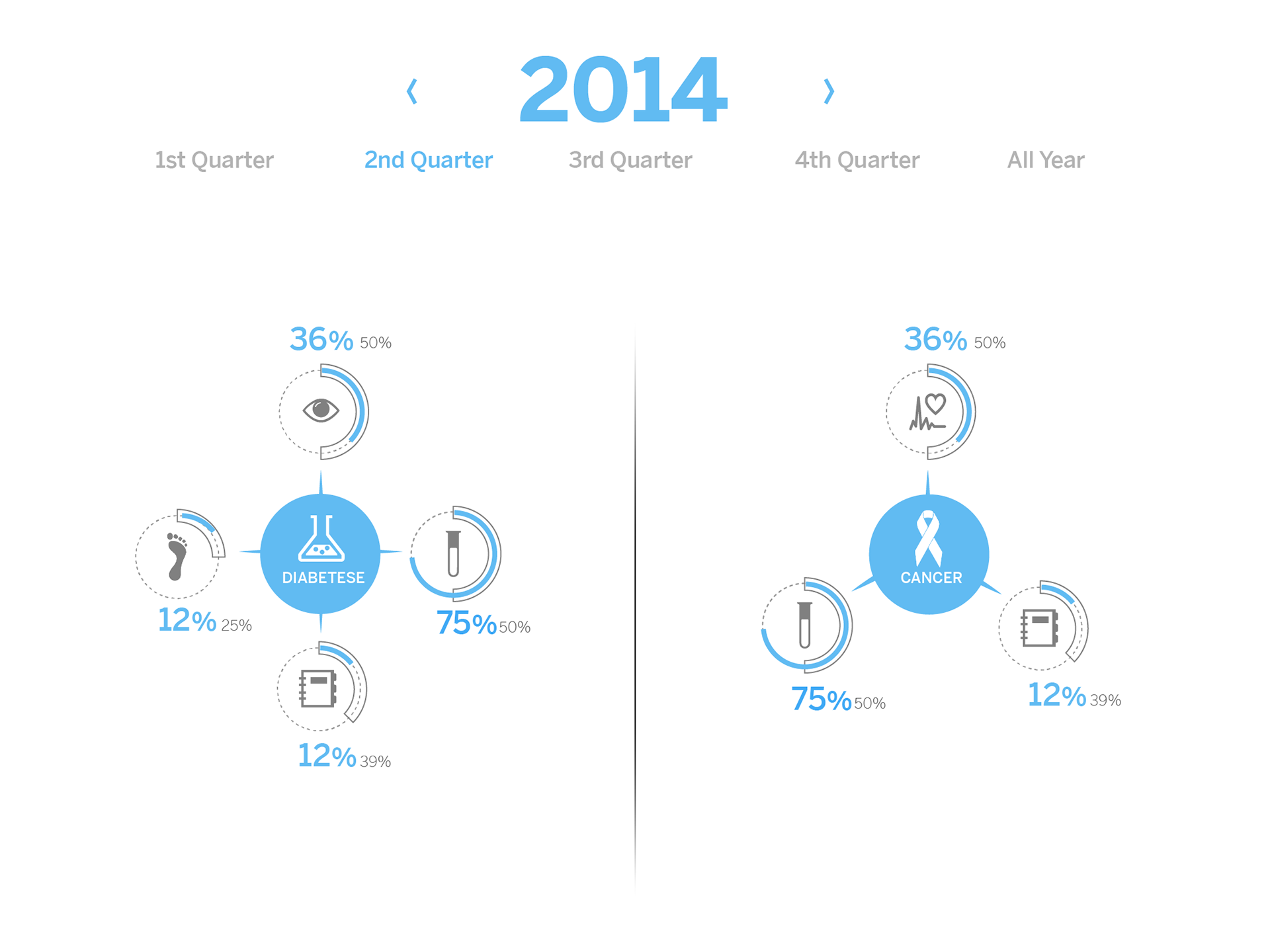
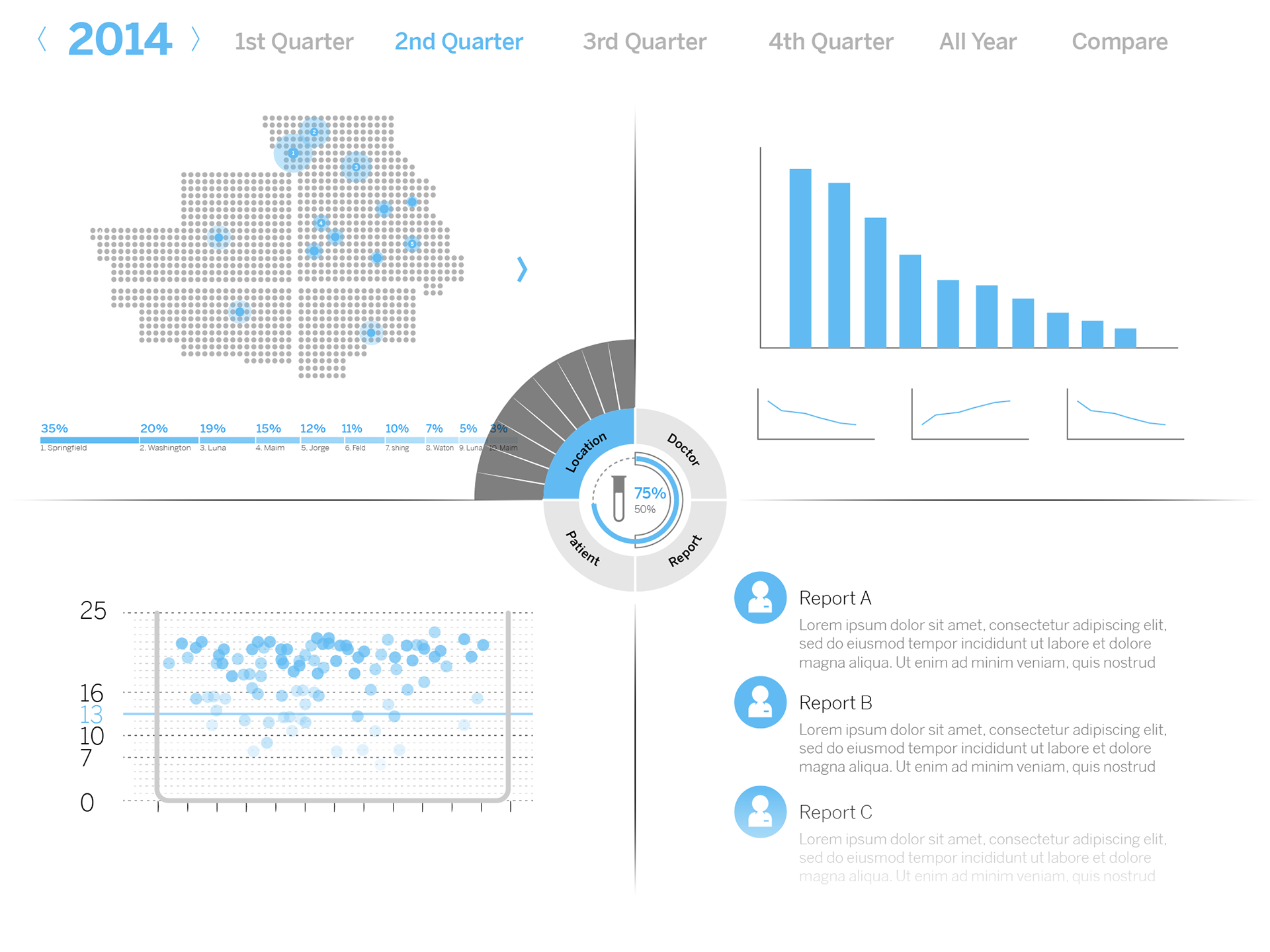
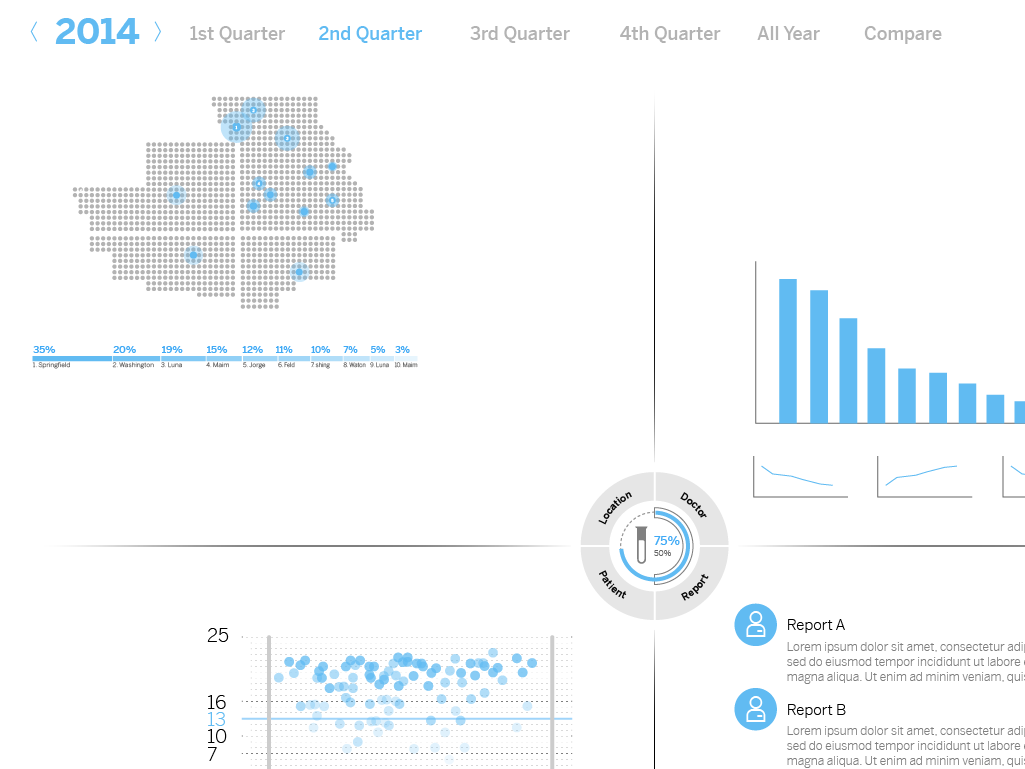
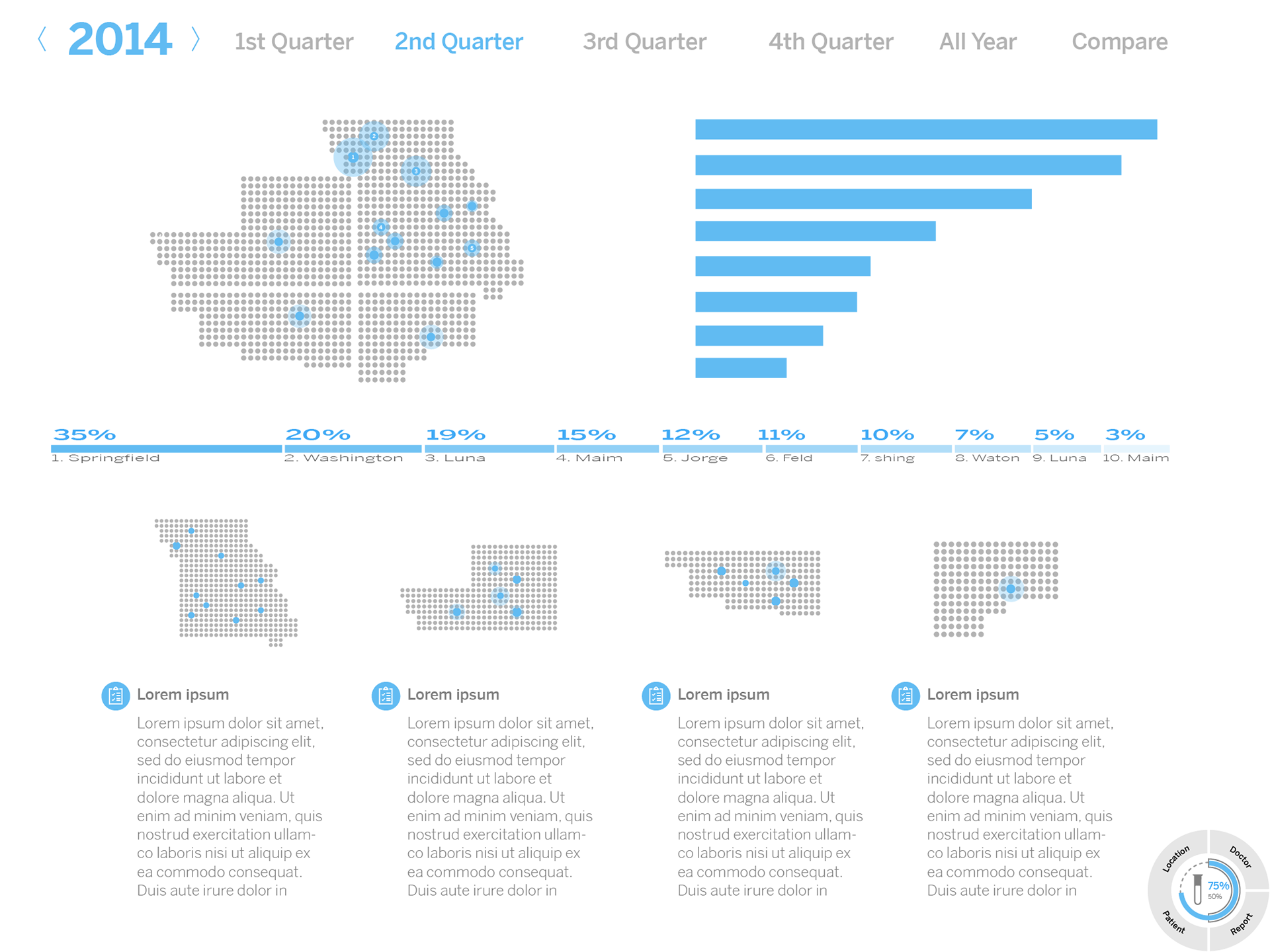
Refine storyboard and screen design
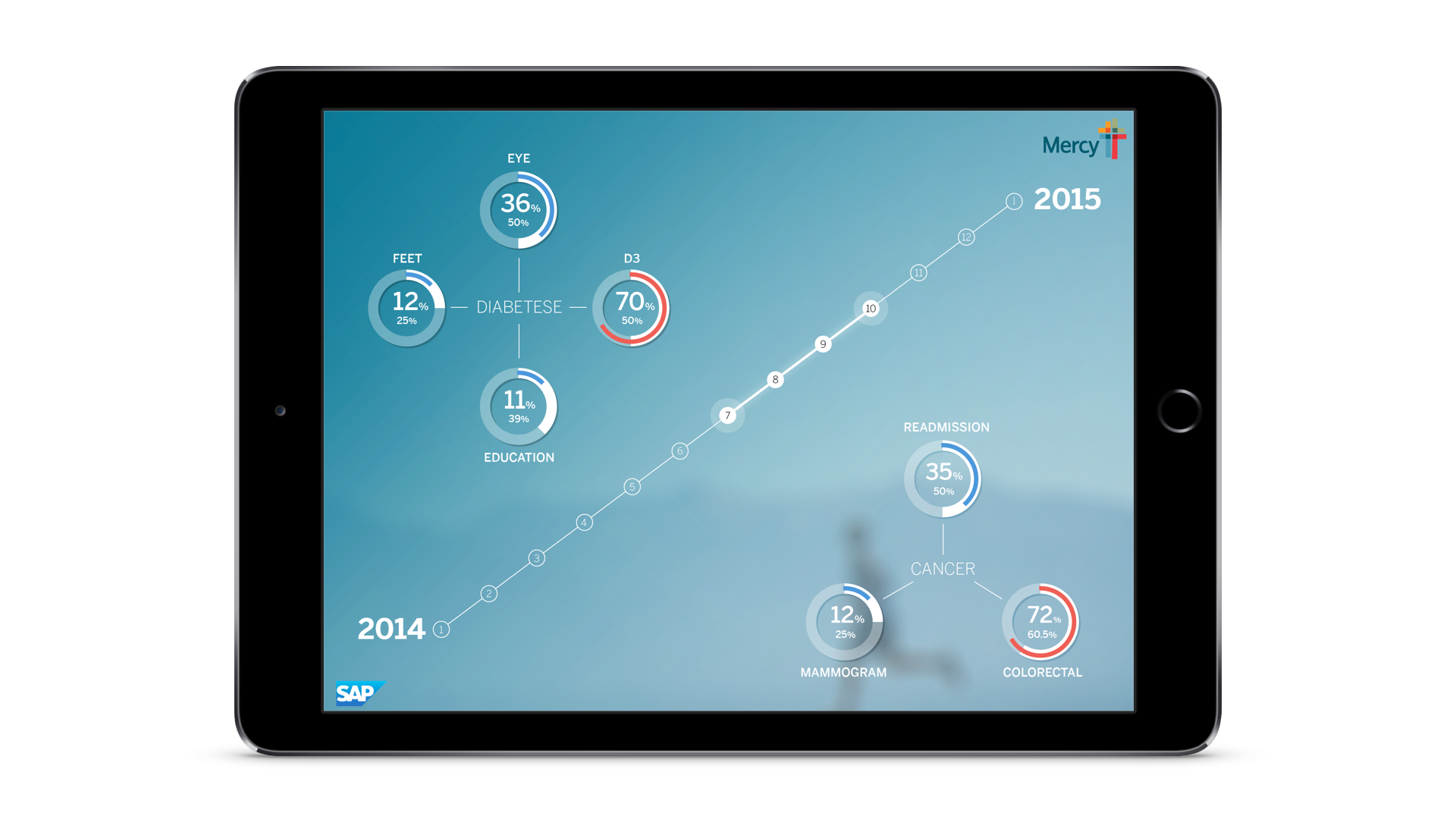
Put interaction and visual design together and deliver the whole story
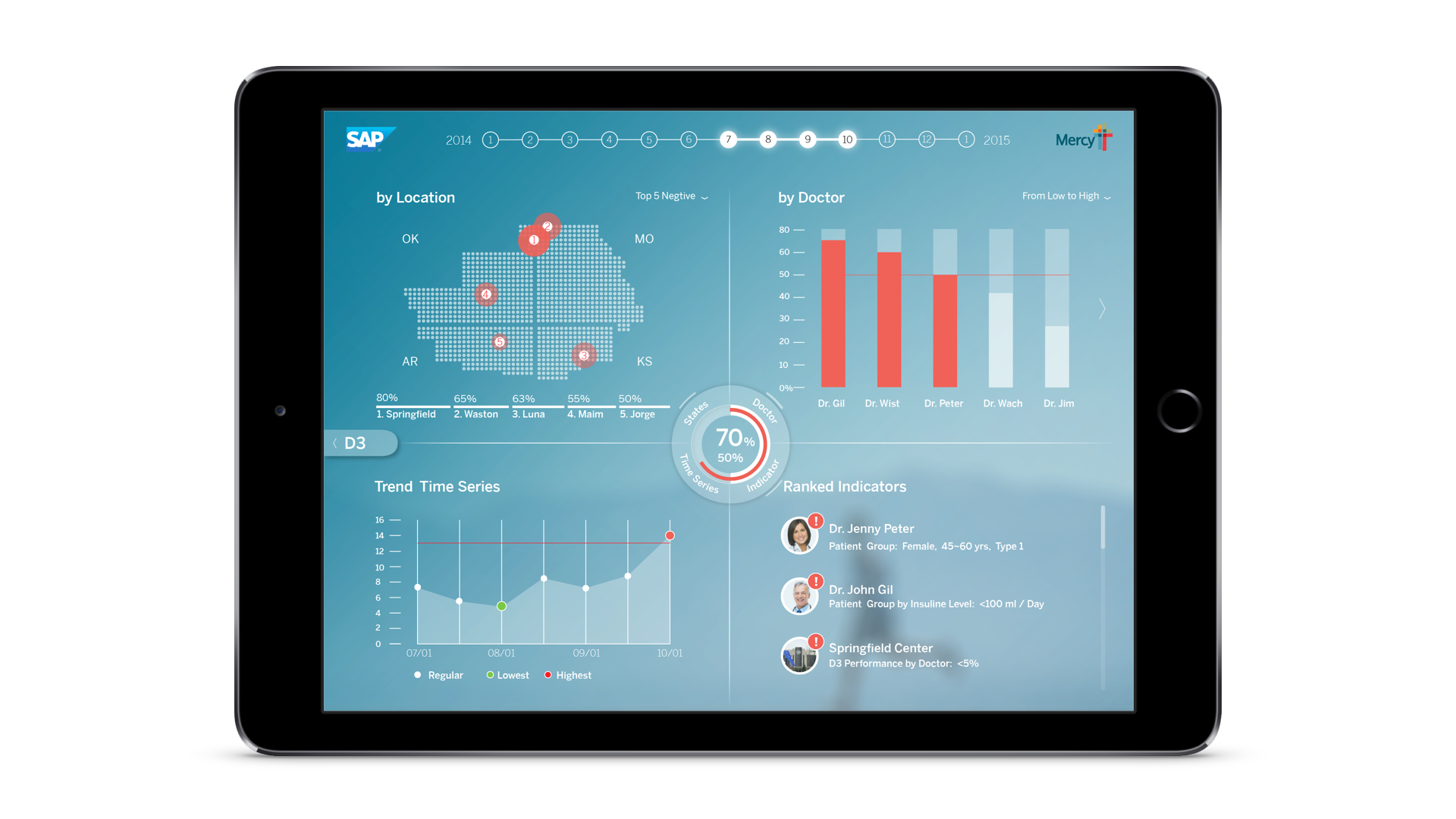
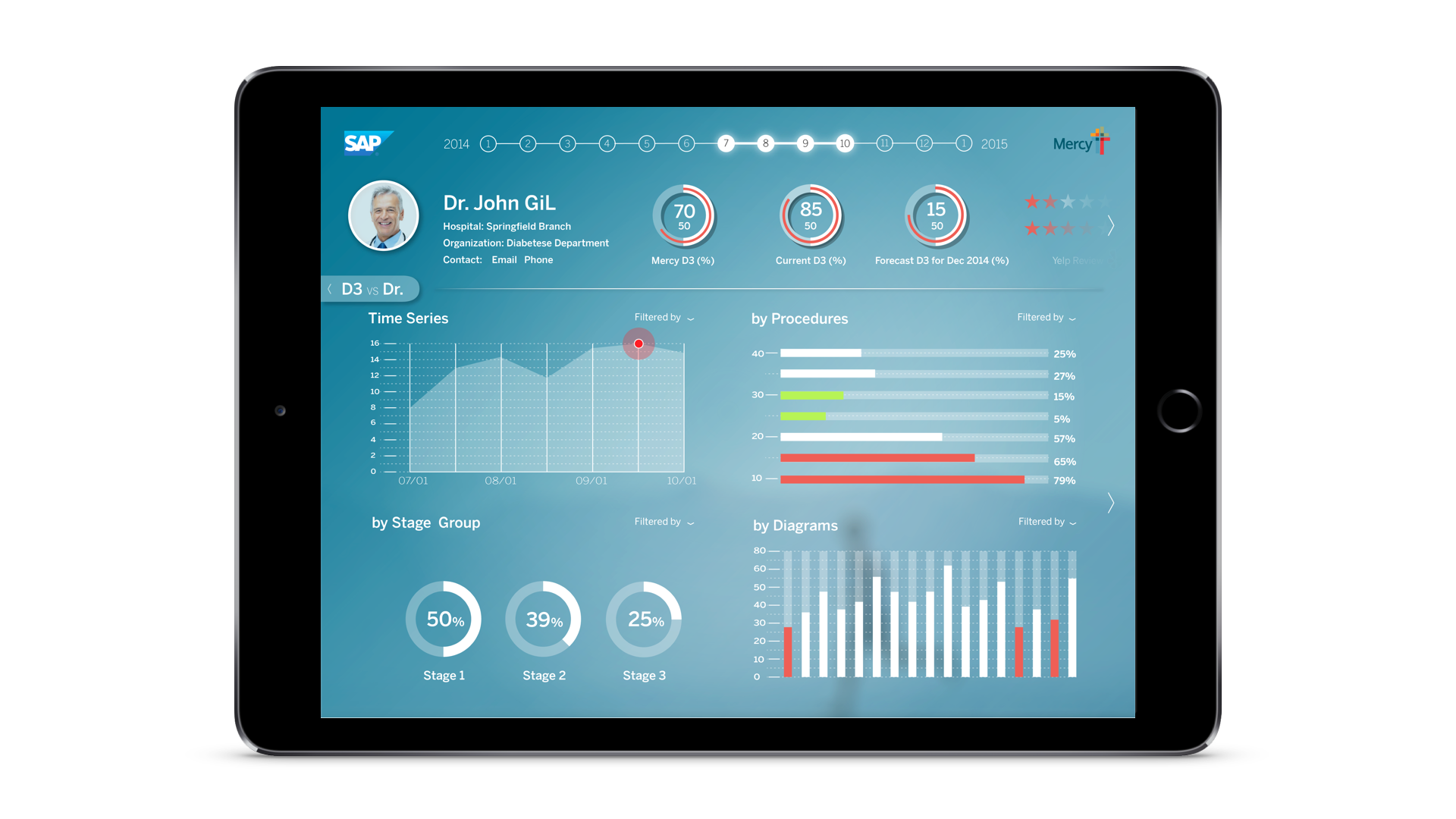
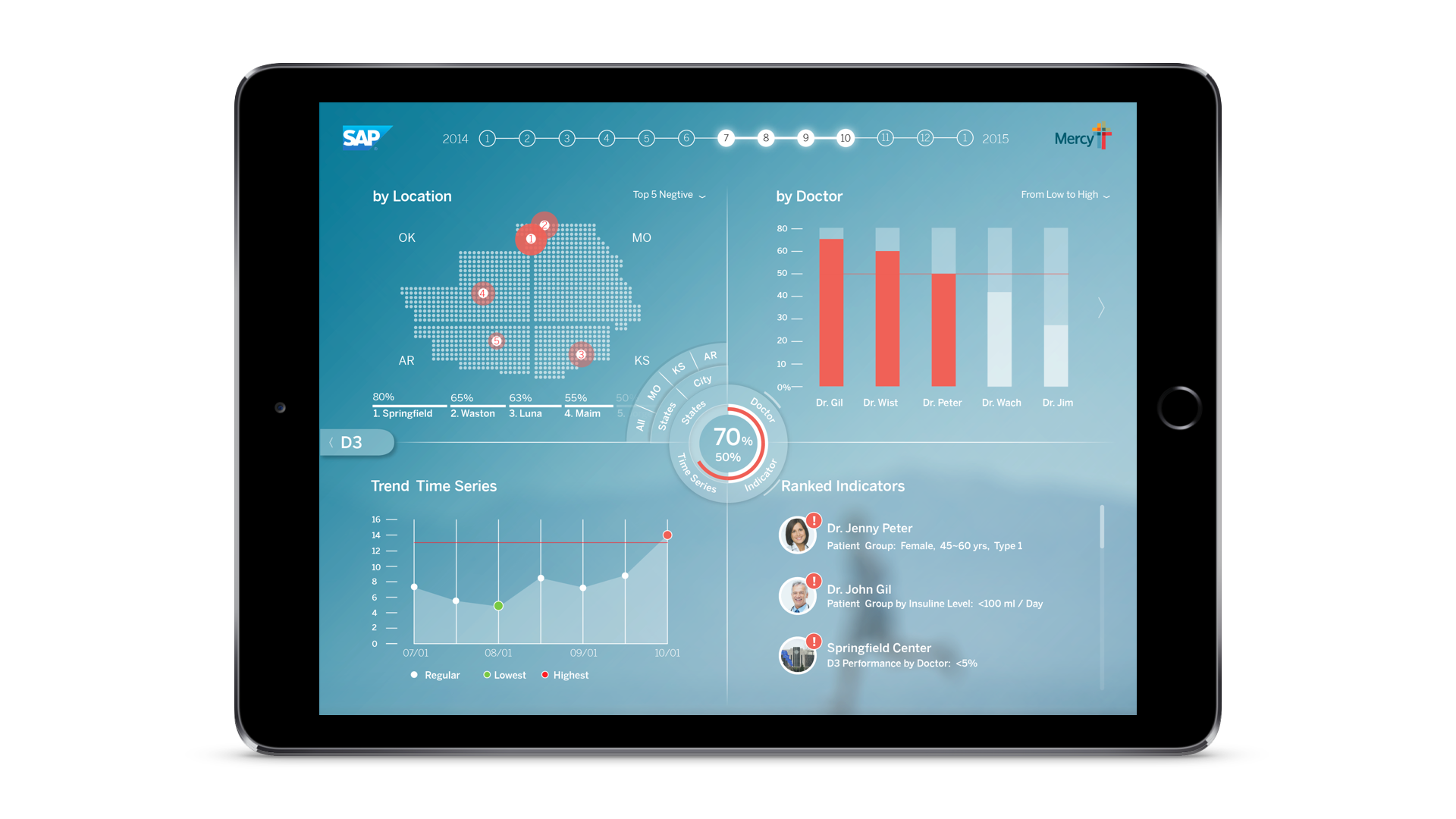
Successful for both customer and SAP
The design was bought in by Mercy group and got scaled-up to be a new SAP health care product. The product won the Analytics Wizard Category at the SAP HANA Innovation Awards 2016 by showing how real-time analytics helped them save millions while empowering the workforce and their patients.
Mercy received the Gartner 2016 Healthcare Supply Chainnovators Award for saving upwards of $9 million last year in surgery-related costs.
"Whether it is maximizing the value of our data, streamlining our operations, or improving care, Mercy will continue partnering with SAP to help make those goals a reality."
— Mark Brinley, Executive Director for Data Analytics and Reporting at Mercy
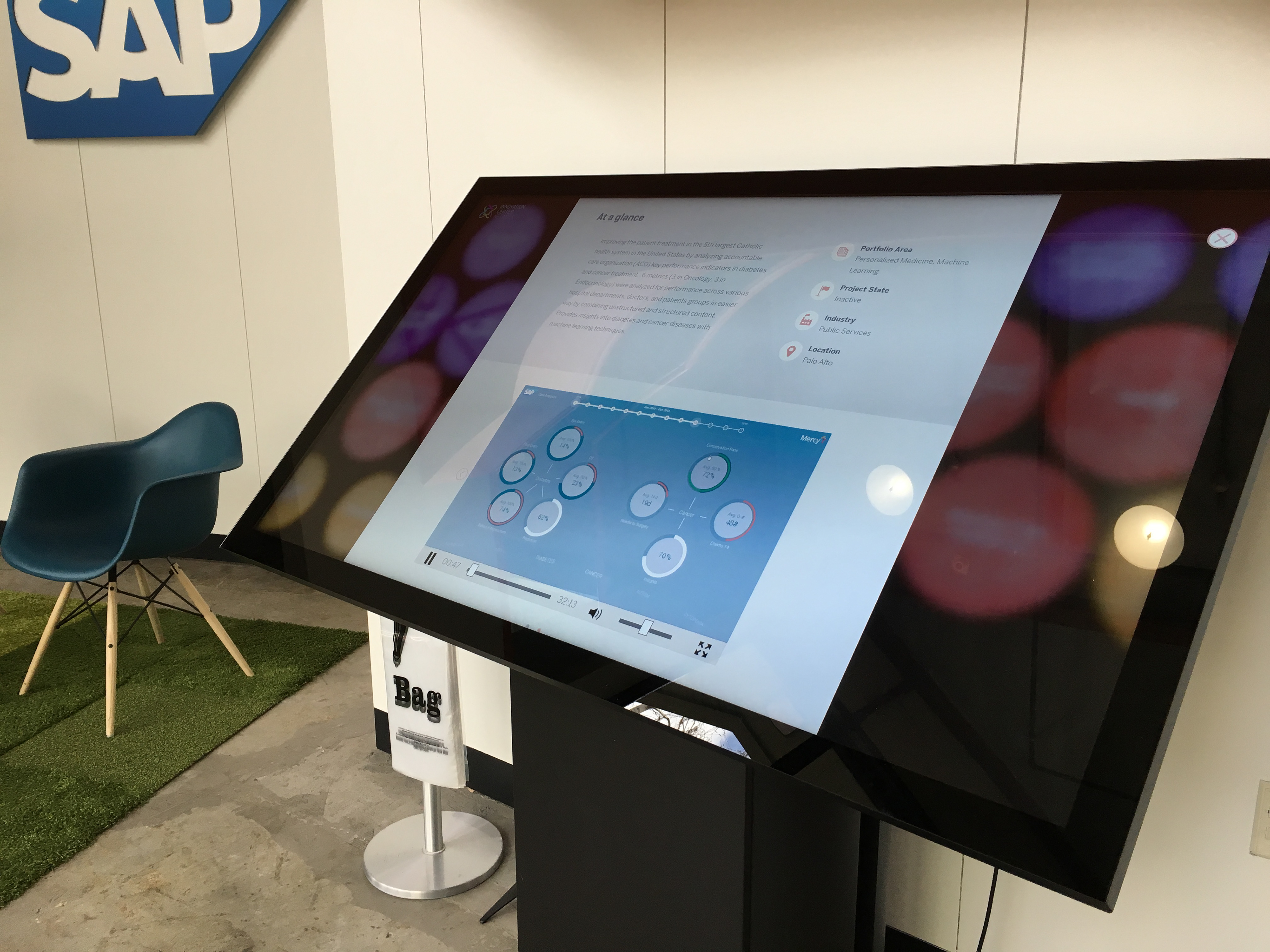
The project is being showcased in SAP Innovation Center: